
December 29, 2025
China seeks to raise grain production capacity by 50 billion kilogrammes
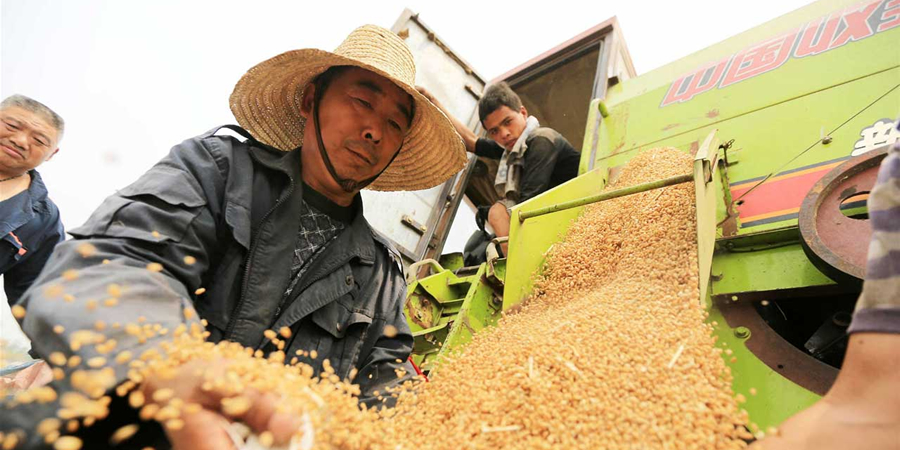
China's National Development and Reform Commission (NDRC) on December 24 said that it would intensify efforts to implement a new round of initiatives to raise grain production capacity by 50 billion kilogrammes, with a focus on boosting corn and soybean output while consolidating and enhancing staple grain production, according to the commission's official WeChat account.
The NDRC, the nation's top economic planner, said in a policy document that the move aims to accelerate agricultural and rural modernisation in support of China's path to modernisation. The goals include strengthening overall agricultural production capacity, improving quality and efficiency, and ensuring stable and secure supplies of grain and other key agricultural products.
In addition to prioritising corn and soybeans in China's capacity expansion, the commission said that it will steadily increase the production of high-quality forage crops such as silage corn and alfalfa.
The NDRC also said that it will further advance large-scale yield improvement programs for major crops including grains and oilseeds, expand the production of high-quality and specialty varieties, and enhance alignment between production and demand. It reiterated the need to strictly uphold the red line for arable land protection, enforce balanced land occupation and compensation, and coordinate the optimisation of agricultural land use.
A Chinese expert said that the latest initiative focuses on better aligning grain production with consumption patterns, with efforts to boost corn and soybean capacity aimed at creating greater room to safeguard domestic food security.
The latest initiative to raise grain production capacity focuses on corn and soybeans, reflecting a strategic effort to better align production with shifting consumption patterns driven by upgrading demand, Li Guoxiang, a research fellow at the Rural Development Institute of the Chinese Academy of Social Sciences, told the Global Times.
"As living standards rise, staple grain consumption is gradually trending lower, but output will remain stable to ensure absolute food security," Li said. "By contrast, demand for feed grains continues to grow over the long term, with corn and soybeans at the core. In particular, soybeans still face a sizable domestic supply gap, leaving China highly reliant on imports."
Li noted that the expansion of grain production capacity is primarily aimed at meeting domestic demand and strengthening supply resilience rather than serving foreign markets. The core objective is to enhance strategic autonomy and safety buffers, creating greater room to safeguard food security amid rising uncertainty in the global trade environment, he said.
China's corn output reached 301.235 million tonnes in 2025, while soybean output stood at 23.932 million tonnes, according to data released by the National Bureau of Statistics (NBS) on December 12.
The latest push emphasises "effective capacity" instead of simple scale expansion, Li added. In the near term, corn imports remain flexible due to strong substitutability and the ability to absorb fluctuations through domestic use and processing, limiting any impact on overall supply and demand.
"Soybeans, however, are likely to remain heavily imported for an extended period despite rising domestic output," Li said. "Compared with the past, the key change is that the import gap is expected to stabilise rather than widen sharply year after year, easing concerns in global markets."
During the 14th Five-Year Plan period (2021-25), China's modern agriculture has reached a new stage, and a steadily improving level of agricultural modernisation provides a solid foundation for the effective implementation of policy decisions, experts noted.
China's total grain output in 2025 reached 715 million metric tons, surpassing 700 million metric tons for a second consecutive year and marking a year-on-year increase of 1.2%, according to the NBS.
China's total grain output surpassed 700 million metric tons for the first time in 2024, remaining above 650 million metric tons for the 10th consecutive year. The per capita grain availability exceeded 500 kilogrammes — well above the internationally recognised food security threshold of 400 kilogrammes, according to an NDRC document.
- Global Times