
December 24, 2025
China estimated to have taken hold more than half of 12 million tonnes of soybeans to be bought from US
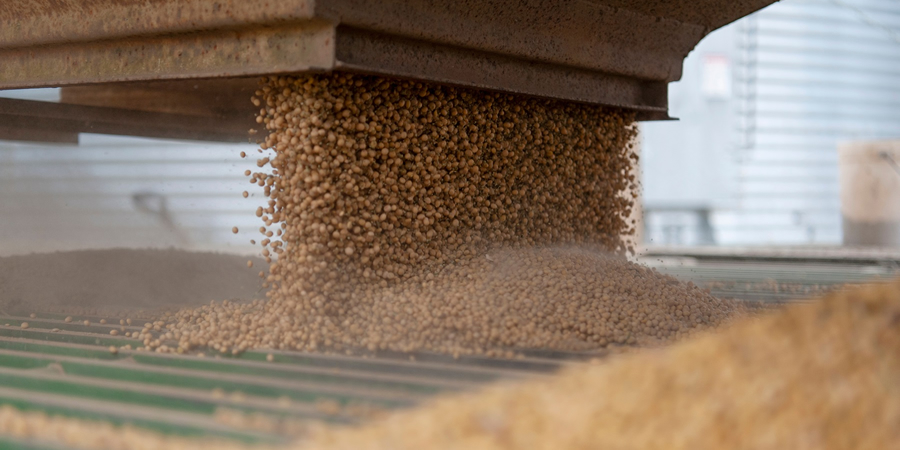
China is estimated to have secured more than half of the 12 million tonnes of US soybeans that Washington said Beijing committed to purchase by early 2026.
While the US Department of Agriculture (USDA) has officially documented nearly four million tonnes in sales explicitly to China, three million metric tonnes currently sit in the "unknown destinations" category. The practice of initial "unknown" bookings, later routed to China, is a long-standing pattern in the soybean trade, often used by state buyers to stabilise prices before physical shipment.
"It's a common practice that the Chinese have used for years regarding beans, soybeans, and sometimes corn," said Sean Lusk, vice-president of Walsh Trading Inc, a specialised commodity brokerage firm based in Chicago, Illinois, the United States. "Unknown Destinations regarding soybean purchases for future shipment have always been considered synonymous with China."
The firm, in its recent report, said that "between China and Unknown Destinations, purchases are close to seven million tonnes so far". Lusk said on December 18 that "multiple sources" indicate China has bought up to 7-7.5 million tonnes so far, describing it as a "pretty decent pace".
This total was echoed by US financial services company StoneX: "We believe that China has bought close to six million tonnes of the 12 million tonnes committed to for the current year," the firm said in a report last week.
However, Lusk emphasised that not much has been shipped.
"The worry is they haven't taken much on the inspections yet. So our trade deals, and they've always been this way, allow China to book sales for future shipment," he explained.
"But if Brazil has a very big crop, or Argentina, they can cancel at any time, which usually occurs.
"It's the February-March timeline when South America is harvesting."
The surge in buying follows a significant wave of activity from Sinograin, China's state grain reserve manager.
The deadlock was broken in late October during a high-stakes 90-minute summit in Busan, South Korea. President Trump and Chinese President Xi Jinping reached a "tactical timeout", agreeing to a one-year trade truce.
Under the framework described by US Treasury Secretary Scott Bessent, China pledged to purchase 12 million tonnes from the current harvest by February and at least 25 million tonnes annually through to 2028.
While China's return to the market has provided a much-needed floor for demand, many US soybean farmers have already liquidated their harvests. Facing a third consecutive year of market losses, producers have been forced to sell early to meet immediate financial obligations.
Plummeting commodity prices throughout the summer, coupled with record-high input costs for seeds, fertiliser, and machinery, have left many growers with critically low liquid assets. Unlike in previous years, when farmers might have stored crops to wait for price rallies, the urgent need to repay 2025 operating loans and cover elevated living expenses prompted a widespread "sell-at-harvest" strategy.
In response to this strain, the Trump administration recently announced US$12 billion in "Farmer Bridge Payments" to aid those impacted by the year's market disruptions until broader trade benefits take effect in late 2026.
"The soybeans are there, but the farmers don't have them. The farmers had to sell all their soybeans during harvest to try to get what money they could out of it, to pay on the bills that they have," said Randall Shelby, a soybean farmer from Arkansas.
He added that it doesn't matter even if China fulfills what the US claims it has committed.
Meanwhile, meeting that tight three-month window requires not just aggressive buying, but a massive overhaul of China's domestic storage capacity, which is currently nearing its limit.
To make physical room for the incoming flood of US soybeans, Beijing has launched an aggressive series of state-reserve auctions.
This internal "shell game", offloading old stocks to accommodate new US arrivals, must be completed before the global supply balance shifts once again.
- South China Morning Post