
October 27, 2014
Manila's GMO march takes a back step
By RICK ALBERTO
An eFeedLink Exclusive Commentary
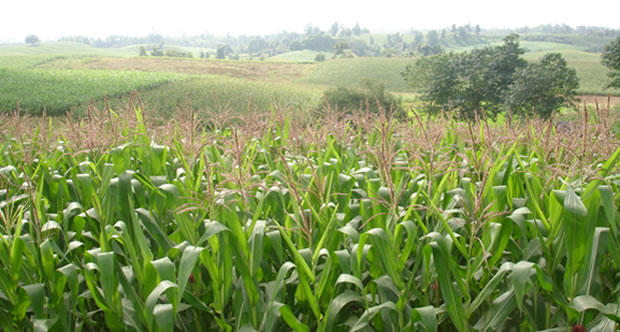
For over a decade now, the Philippines has been growing genetically modified (GM) corn, making it a leader in biotechnology in the whole of Asia. But a recent decision by the country's Court of Appeals could set back its march toward self-sufficiency in corn and other crops.
As early as 2003 the Philippines approved the propagation of the genetically modified Bt corn, where the Bacillus thuringiensis gene is inserted to produce a protein that's supposed to protect it from the Asiatic corn borers. The government's official go-signal for the commercial propagation was not without fierce opposition from various sectors including local churches.
Several militant farmers' groups rallied, with some members going on hunger strike for days, against the variety. Their opposition against Bt corn was based mainly on health and environmental concerns.
There came a point when the oppositors asked for a moratorium on the propagation of the GM corn, but the Department of Agriculture adamantly rejected the moratorium demand, saying that it had no basis to declare Bt corn unsafe. The DA says that as a policy, it encourages further studies to provide science-based support to differing claims.
More than a decade after, the Philippines today is the world's 12th-largest producer of Bt corn, a boon to 400,000 Filipino corn farmers who earned additional PHP8 billion (US$178.6 million) profit as of 2012, according to Philippine Agriculture Secretary Proceso Alcala.
After the success of Bt corn, scientists from the University of the Philippines Los Banos (UPLB) and other government agencies field-tested Bt eggplant and the vitamin A-enriched Golden Rice in different areas in the country until the Philippine Court of Appeals stopped the field trials for Bt eggplant in May 2013 upon the petition of Greenpeace and other groups. The court cited such grounds as the absence of a scientific consensus on the safety and impacts of Bt eggplant. It said Bt eggplant, with its social, economic and environmental impacts, should not be entrusted to scientists only but should also involve all stakeholders.
The University of the Philippines Los Banos (UPLB) and other government agencies doing the field tests appealed the lower court's decision to the Supreme Court.
The Biotechnology Coalition of the Philippines (BCP), one of the intervenors in the case, feared that the planting of Bt corn would similarly be banned since the technology used in Bt eggplant is virtually the same as in Bt corn and other GM crops.
BCP cited the findings of UPLB scientists, led by Dr. Desiree Hautea, that in their countless field tests, it was shown that while the protein in Bt eggplant is only lethal to fruit and shoot borer, it does not affect humans, farm animals and other insects. Moreover, the scientists attested that the field tests did not show adverse effects on the environment.
This seems to be corroborated by the conclusion of two University of California Davis researchers who did a comprehensive review of livestock-feeding studies spanning nearly 30 years and that covered over 100 billion animals, which included those fed genetically engineered feeds since 18 years ago when GE feeds were first introduced.
UC Davis animal scientist Alison Van Eenennaam and her co-researcher Amy E. Young concluded based on their review of the studies: "Studies have continually shown that the milk, meat and eggs derived from animals that have consumed GE feed are indistinguishable from the products derived from animals fed a non-GE diet."
Indeed, there is a need for wider dissemination and more awareness of the researches and studies that all find that GE crops both as food for humans and for animals killed to serve as food for humans offer no risk to biosecurity.
Ignorance may spell doom for mankind in this era of climate change. The Philippine appellate court based its order to stop field trials of GM eggplant "in the absence of full scientific certainty that they are safe to humans and the environment".
It cited a paper published by scientists led by French molecular biology professor Gilles-Eric Seralini that purportedly found rats fed with GM corn developed cancer tumours. But the Food and Chemical Toxicology Journal retracted the Seralini paper in November 2013 following criticisms by other scientists of the research's methodology.
The Philippine courts need to backtrack to 2013 when the Department of Agriculture proved an immovable stone against anti-Bt corn forces and likewise ask whether there is a scientific consensus on the danger of Bt eggplant.
British journalist Mark Lynas, who used to be against GMOs, has urged scientists to be more active in debates as he said they were losing to anti-GMO groups in the race for public acceptance.
On the GM eggplant, he said scientists "must explain that the GMO route is essential to reduce pesticide applications that are currently endangering the health of farmers and consumers alike."
And in the face of increasing population, severe weather and declining agricultural growth, biotechnology can boost the world's capability to ensure food security, adds Dr. Paul Teng, chairman of the board of trustees of the International Science for the Acquisition of Agri-Biotech Applications.
All rights reserved. No part of the report may be reproduced without permission from eFeedLink.