
Gut health in 5 pillars
Maintaining gut health in young piglets has far-reaching implications for the entire pig growth cycle and should therefore start in the farrowing crate, by ensuring that piglets ingest enough colostrum and milk during the suckling period for optimal health and development of the gut barrier system. At this stage, it is important to consider what is meant by gut health and what are the desired results of managing gut health in the piglet. Bischoff explains the complexity of the term 'gut health' in his 2011 article, and tries to define it using the following five major criteria:
1) effective and balanced immune response,
2) normal and stable microflora,
3) absence of gastrointestinal tract (GIT) disorders,
4) effective digestion and absorption,
5) and the animal's overall well-being (Bischoff, 2011).
In this instance, good gut health in suckling piglets means less diarrhea and better body weight at weaning which helps the piglet withstand the weaning transition and thrive through the nursery stage.
Weaning is a critical stage in the piglet's life which exposes the animal to tremendous nutritional, environmental and social stress. The gut is the main organ to be affected by the stress of weaning, so optimizing piglet gut health during this phase will have a positive effect on piglet performance post weaning which is multiplied as the animal nears the grow-finish stage. A study by Tokach et al. (1992) from Kansas State University demonstrated that each additional pound (450 g) live weight gained at weaning (at 21 days of age) translates into an increase of approximately 2 pounds (910 g) at the end of the nursery stage (at 56 days of age) and 4 pounds (1.815 kg) at the end of the finishing period.
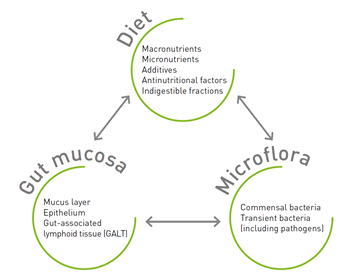
Several factors are involved in piglet gut health maintenance. Diet, gut mucosa and the microbiota have been proposed by Conway (1994) as the three major players in piglet gut health (Figure 1).
Figure 1: Schematic representation of the gut ecosystem, modified by Montagne et al. (2003) from Conway (1994).
1) Effective Immunity
Piglet gut health management starts immediately after birth by managing the sow's diet and health during the late gestation and early lactation periods. Indeed, the piglet is immunodeficient at birth, and is highly dependent upon the supply of both specific and non-specific immune factors in maternal colostrum and milk for immune protection, development and survival. Immunoglobulin G (IgG) is the most important globulin in the first weeks of life, and IgG from colostrum is absorbed through the gastrointestinal tract during the first 24 to 48 hours postpartum. Figure 2 shows that supplementing gestating and lactating sows with Actisaf® ,a concentrate of live yeast Saccharomyces cerevisiae Sc 47 proprietary strain, improves milk quality by increasing the concentration of IgG in the sow's colostrum, and this is passed on to the piglets (Jang et al., 2013).
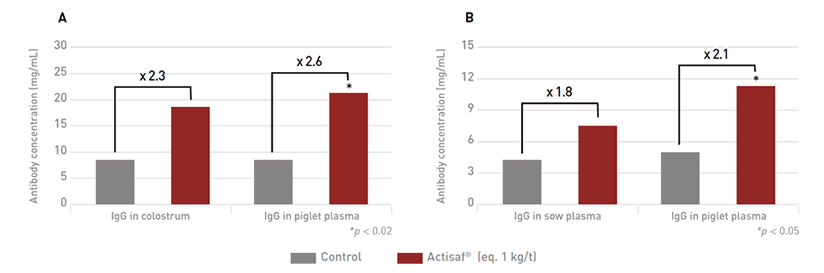
This improves the piglet's immune response to the pathogens which the sow has already been exposed to, thereby improving piglet gut health and performance during the suckling period. Another study has taken this a step further and demonstrated that supplementing sow diets with Actisaf® during gestation and lactation not only increases IgG in the colostrum (Figure 3), but also maintains higher levels of IgG and IgA in the milk during the lactation period (Zanello et al., 2013). This study highlighted the specificity of Actisaf® Saccharomyces cerevisiae Sc 47 proprietary strain on the enhancement of the immune quality of sow colostrum.
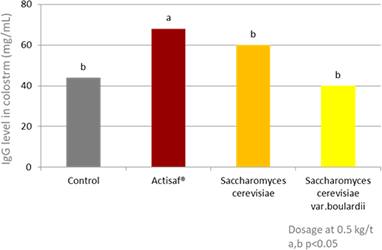
The results suggest that Actisaf® can stimulate the sow's immune system and increase the immunoglobulins secreted in the colostrum and milk.
2) Absence of gastrointestinal tract (GIT) disorders
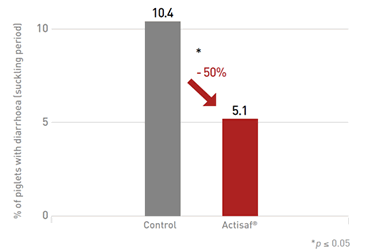
Recent field studies also suggest that the low incidence of diarrhea observed in piglets born to Actisaf® supplemented sows (Figure 4) is due to the passive transfer of immunoglobulins from sow to piglets, which helps optimize piglet gut health.
Figure 4: Reduction of suckling piglet diarrhea in field condition (Vietnam). Sows diet supplemented at 1kg/t in gestation and lactation.
3) Normal and stable microflora
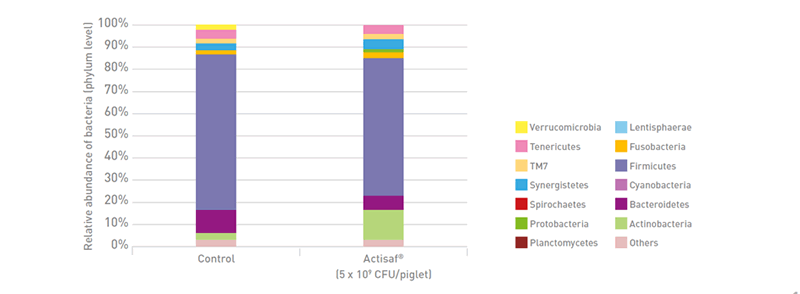
The modification of the gut microbiota illustrated below (Figure 5) as a result of Actisaf® supplementation also has a role in maintaining gut health and improving piglet immunity and performance. Phylum Actinobacteria, which includes beneficial bacteria such as Bifidobacterium and Collinsella, was enriched by Actisaf® supplementation while phylum Bacteroidetes, including some potentially harmful bacteria, was present at lower levels in the Actisaf®-supplemented group than the Control group.
Figure 5: Phylum-level taxonomic classification of bacteria in cecum samples from piglets supplemented with either sterile water or Actisaf® by oral gavage, from one day old until weaning. Hindgut microbial composition in the different Treatment groups was compared at the phylum level of classification (Kiros et al., manuscript in preparation).
4) Effective absorption & animal performances
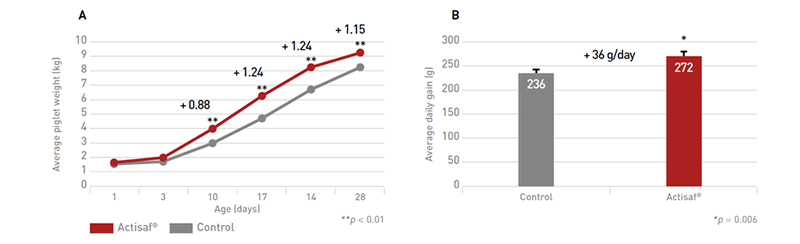
Many studies have demonstrated the importance of feeding piglets a creep feed from around 12 days of age (Carstensen et al., 2005; Pluske et al., 2007) and supplementing piglets with Actisaf® in this feed can further boost the benefits of creep feeding by stimulating the immune response and modifying the gut microbiota. A study has shown that feeding Actisaf® to suckling piglets from birth until weaning improved piglet performance (Figure 6).
Conclusion