
May 29, 2025
Orffa: Delivering established innovation within animal nutrition and health market combined with a regionally tailored approach
Orffa was established over 50 years ago in North-West Europe, and at that time already involved in bringing feed additives to market.
Over the years, Orffa expanded its geographical footprint and started to develop and produce specialty feed additives under its own scope and brand name (Excentials). Today, Orffa is active in more than 90 countries. With a clear regional focus, Orffa can service customers with clear customer focus and attention, adjusted to local market needs.
Arno van der Aa, Director of Marketing and Innovation, and Ramakanta Nayak, Managing Director of Asia Pacific, share insights into the company’s latest developments.
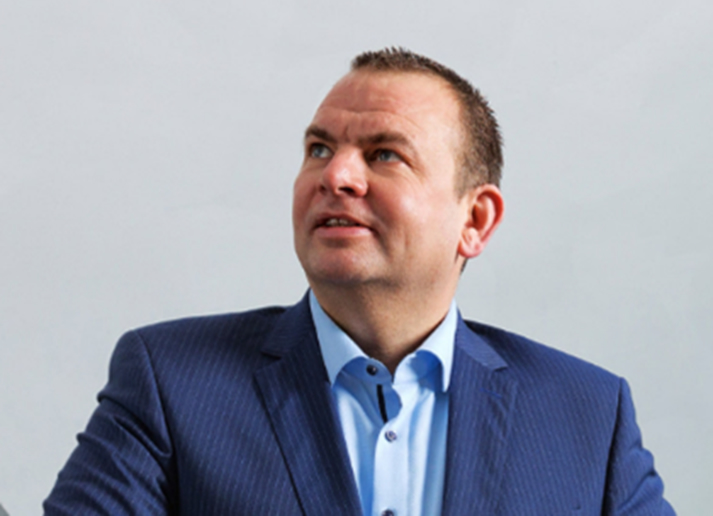

Ramakanta Nayak, Managing Director of Asia Pacific, Orffa
Can you reveal the strengths on which Orffa is built and how they help the company to navigate through today's landscape?
Arno van der Aa: It is clear that the global livestock industry and feed sectors are at a crossroad. Our industry is undergoing significant transformation which is driven by economic, environmental, and technological factors.
Orffa has always been very agile. We moved along with industry challenges in Europe over the last decades, whilst simultaneously entering new markets in terms of geography (e.g. Latin America, Asia, and Africa) as well as animal species (e.g. aquaculture). Key to this success lies in our innovation capabilities, and developing and producing feed additives that set new standards in their respective categories, outperforming existing market products.
More importantly, we launched additives (e.g. the Excential Energy Plus digestibility enhancer and Excential Selenium4000 novel organic selenium source) that resonated with customer needs and addressed unmet needs in the market.
Asia Pacific is a major market for animal feed and livestock production. How does Orffa maintain its competitive edge? Do you tailor your strategies for different regions, or is there a unified global approach?
Ramakanta Nayak: We certainly tailor our approach based on regional differences. This year, we restructured our organisation to better address the unique needs of each market.
Previously, we had two global business units—one for ingredients and one for specialties. Now, we have three regional business units: Asia, Europe (including the Middle East and Africa), and the Americas.
While our core solutions are rooted in science and innovation developed at a global level, each regional business unit operates autonomously and adapts these solutions to local market conditions. For example, while Europe is focusing on reducing carbon footprints and adjusting nutrition for slower-growing breeds, APAC is centered on helping customers achieve their growth ambitions. The hybrid approach of global standards with local execution, coupled with the flexibility of regional hubs allows us to remain competitive and responsive.
The Asia-Pacific region has led global growth in livestock production. However, in some developing countries, the poultry and livestock sectors have lagged in adopting the latest innovations. How does Orffa address this?
Ramakanta Nayak: Economic and population growth reveals tremendous opportunities in APAC agriculture. In most countries, a big transition has already taken place from backyard farming towards more professionalised integrated companies. While these large integrators often drive the adoption and co-development of new technologies, the resulting innovations also gradually become accessible to more traditional farming systems.
Orffa brings decades of experience from North-Western Europe, where the industry was historically built around family farms. This background has equipped us to work closely with all segments of the value chain—from smallholders to large enterprises—ensuring tailored support and practical innovation.
Our role is to bridge the gap by providing solutions that are not only cutting-edge but also scalable and adaptable. Ultimately, our focus is on delivering value that helps all types of farmers meet modern production standards and overcome current challenges.
Talking about solutions, can you elaborate on why Orffa focuses on three key segments: gut health and immunity, feed efficiency, and mineral nutrition?
Arno van der Aa: These three solution areas are our priority because they address the most pressing challenges faced by our customers. We see great potential to support them through innovation.
For feed efficiency, we already have a strong position with one of our digestibility enhancers, Excential Energy Plus. We plan to expand this product range significantly to meet customer demands for more cost-efficient and environmentally friendly feed solutions.
In mineral nutrition, Orffa has decades of experience, continuously evolving with the latest innovations. One of our strongest products, Excential Selenium 4000, sets a new standard in the organic trace minerals market.
In gut health and immunity, Orffa has been closely involved in transitioning the industry towards antibiotic-free diets driven by EU regulations starting in the late 90s. While the early focus in the market was on finding a single silver bullet solution, there is now a broad consensus that a multifactorial approach is essential—one that supports both the animal and its microbiome effectively. Our 30 years of research and experience enable us to share this expertise with customers around the world.
Emerging diseases and changing government regulations continue to shape this space.
Antimicrobial resistance is a growing concern, and by 2050, it could become one of the leading causes of death in humans. This will lead to stricter regulations on antibiotic use, making sustainable alternatives increasingly important.
Orffa emphasises a more service-based approach. How does the launch of the collaboration with Florates at VIV Asia (in Bangkok, Thailand) fit in that segment?
Ramakanta Nayak: In order to have a long-term and intimate relationship with your customers, it is all about understanding their current challenges and needs. To identify those needs, it all starts with a good connection and conversation first.
We identified Florates as a unique tool that could very rapidly, in a pragmatic way, deliver insights for our customers on the health status of their flocks on-farm. The journey starts with providing insights and closing information gaps. From this perspective and understanding potential causes of depressed gut health, Orffa is well positioned to bring in know-how on possible interventions via feed. The insights provided by the Florates model thus help to optimise value for our customers.
Can you elaborate on the diagnostic tools you’ve developed with Florates?
Arno van der Aa: Florates, a scale-up company from the Netherlands, has developed a unique patented technology that allows farmers to assess gut health without unnecessary entries to farms, ensuring biosecurity. The tool involves taking rectal or cloacal swabs at the farm, which can then be analysed at a local laboratory equipped with a PCR machine. The samples don't have to cross borders. Orffa provides the necessary consumables and manuals for the analysis.
Within 24 hours, farmers and integrators receive a report that evaluates gut health based on five key parameters. This enables them to take immediate action when needed. It is a revolutionary technology that allows easy interpretation of the complexity of the microbiome of our livestock animals, that are currently hidden.
Digital farming, artificial intelligence, and big data are gaining momentum. How is Orffa incorporating digital technologies into its approach?
Arno van der Aa: Digital farming, AI, and big data are crucial for the future of precision nutrition. Our collaboration with Florates is a step in this direction, allowing farmers to scan samples via QR codes, and then the analysis done in the laboratory can be scanned via QR.
As we gather more data, we can enhance our predictive capabilities and continuously refine our offerings. The model that is being presented with Florates works like Lego. We now measure five parameters, but the flexibility of this model allows us to add more parameters over time, further strengthening our digital farming initiatives.
Data management and information are key to driving sustainability. We will enhance our efforts in adopting and utilising big data, artificial intelligence, and digitalisation. To achieve this, we plan to partner with dedicated agri start-ups and innovators, especially those making progress in on-farm and feed analytics.
Sustainability is a key goal for major agricultural firms. Beyond the solutions presented at this event, how else is Orffa contributing to sustainability objectives?
Arno van der Aa: Sustainability efforts vary depending on the region.
In Europe, the push for sustainability is strongly driven by government regulations, particularly through the European Green Deal. This has been a major motivation for us to develop solutions that help reduce the carbon footprint of animal nutrition.
In the APAC region, the key driver might sometimes be different. While the end solution remains the same, the primary motivator is often cost efficiency. Reducing feed costs while improving sustainability is a major advantage for farmers in APAC. Additionally, companies that invest in sustainability gain a more favorable green profile, making their businesses more attractive to investors or open for export.
To further strengthen our sustainability efforts, we have conducted life cycle assessments (LCAs) for our key products. As one of the pioneers in the industry to do so, we are proud to announce that Excential Energy Plus, one of Orffa’s leading innovations, has been officially certified under the Global Feed LCA Institute (GFLI) Branded Data Methodology. This recognition positions Excential Energy Plus as the first nutritional emulsifier globally to be independently validated for its environmental footprints. The certification confirms the product’s contribution to sustainable livestock production and supports feed manufacturers and integrators in reaching their climate goals.
Another key sustainability initiative is through our amino acid portfolio, which supports the formulation of low crude protein diets. This approach not only enhances feed efficiency and cost savings for farmers but also significantly reduces nitrogen emissions, making it a powerful tool for improving both environmental and economic outcomes. These combined efforts reflect our commitment to delivering sustainable, science-based solutions at every level of animal production.
Finally, where do you see Orffa in the next five years?
Ramakanta Nayak: We are shifting from a product-based sales approach to a solution-based model. This means engaging more deeply with customers to understand their specific challenges and providing tailored recommendations. Alongside Florates, we will invest more in services to provide the best offerings and advice possible.
As our regional structure becomes more established, we will ramp up our innovation pipeline to bring more novelties and services to market.
We have chosen our three focus areas—gut health and immunity, feed efficiency, and mineral nutrition—because we believe they are crucial for the future of farming. Moving forward, we will continue to prioritise diagnostics and technology-driven solutions to enable proactive farm management.
Over the next five years, partnerships will remain a key driver of Orffa’s innovation strategy. We will continue to build on successful collaborations—such as our work in microbiome monitoring—to advance precision nutrition and improve animal performance.
As new challenges emerge in livestock production, including those related to efficiency and emissions, we are focused on delivering practical, science-based solutions that support producers globally.
A major milestone in our five-year roadmap is the launch of new natural feed additives aimed at reducing methane emissions by up to 50%. This upcoming innovation reflects Orffa’s commitment to addressing evolving industry demands through targeted research, product development, and collaboration. It also plays a significant role in advancing our sustainability initiatives by helping producers lower environmental impact while maintaining performance and efficiency.
- Gemma Delmo and Nicholas Yong, eFeedLink