
May 7, 2025
AB Vista: Navigating uncertainties in livestock and poultry production
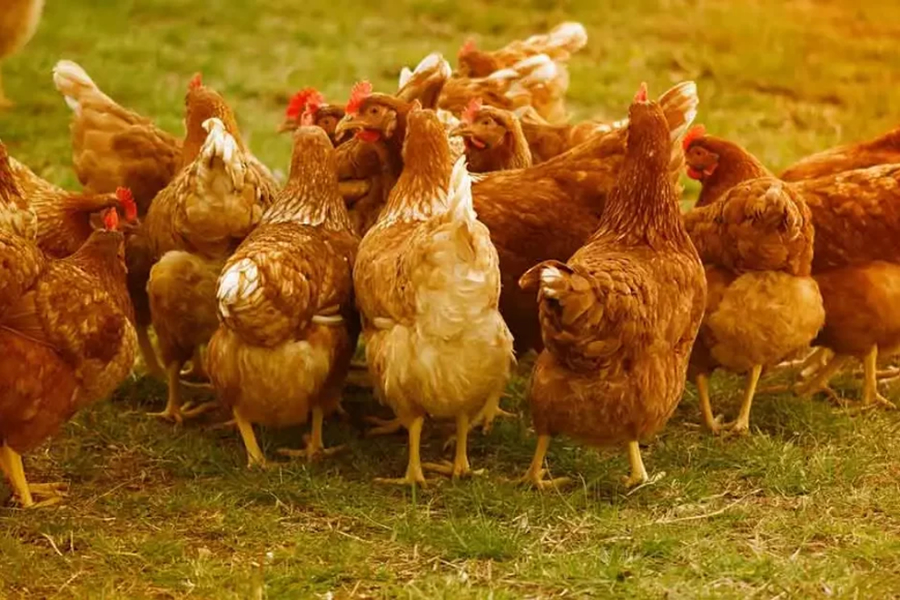
The livestock and poultry industries are constantly evolving, facing new challenges driven by global trends, environmental concerns, and consumer demands.
AB Vista is at the forefront of helping farmers and producers navigate these complexities.
eFeedLink spoke to Dr Tiago Tedeschi dos Santos, Innovation Director at AB Vista, to discuss how their solutions are shaping the future of animal production, from gut health to sustainability and digitalisation.

Dr. Tiago Tedeschi dos Santos, Innovation Director at AB Vista
In today's complex landscape of livestock, poultry, and feed production, how can AB Vista's solutions help these sectors manage uncertainties?
Dr Tiago Tedeschi dos Santos: Every year presents its own challenges in animal production. AB Vista has long been committed to helping customers produce more efficiently. While this remains our core focus, we are also exploring additional ways to support our customers.
The industry is experiencing greater pressure due to the reduced use of antibiotics and increasing consumer demand for improved animal welfare. AB Vista is well-positioned to assist customers in these areas. At the end of the day, this benefits the entire industry. Our goal is to produce better solutions that meet consumer expectations while ensuring animal health and welfare.
Our focus on solutions is because AB Vista takes a holistic approach, combining products, services, and expert support to help customers navigate these challenges. While industry-wide issues may be similar, each customer's situation is unique. That's why we tailor our support to individual needs, helping them adapt and address their specific challenges effectively.
Can you tell us about Progres?
Dr. Tiago Tedeschi dos Santos: Progres is a new product we are introducing to the market. In Asia, we have already secured registration in Malaysia and are in the process of expanding to other countries, depending on regulatory requirements.
Progres is based on resin acid, a natural component derived from the paper and pulp industry. This gives it a circular economy approach, making it a sustainable solution. Research conducted by both AB Vista and independent universities has shown that resin acid helps reduce the natural inflammatory status of animals. This leads to improved long-term performance, making it an exciting addition to the market here in Asia—particularly in addressing today's industry challenges.
How is Progres different from other feed additive products?
Dr. Tiago Tedeschi dos Santos: What sets Progres apart is its natural origin, which is a key advantage. While other natural additives exist, Progres is unique because it undergoes thorough analysis to determine the precise amount of resin acid in each batch. Besides that, because of its unique origin and characteristics, Progres is intrinsically thermostable and with precise and constant analysis of its components in every batch.
Many natural products on the market experience fluctuations in their active components over time. With Progres, we ensure consistency, allowing producers to rely on stable results. Additionally, the product's circularity contributes to its environmental benefits, making it a sustainable choice for the industry.
Soybean meal is one of the most expensive feed ingredients, and companies are looking for alternatives. Does AB Vista offer any solutions?
Dr. Tiago Tedeschi dos Santos: Every customer is unique, and while soybean meal presents a challenge, the way each customer addresses it varies. I don't see the industry moving away from soybean meal entirely—it remains a highly available, cost-effective protein source.
However, that doesn't mean we have to rely solely on it. AB Vista offers enzyme solutions that improve feed quality and nutrient absorption, allowing producers to use less soybean meal or incorporate alternative ingredients. Some ingredients were previously restricted due to anti-nutritional factors like high fibre content, but our solutions help mitigate these challenges.
Additionally, we provide services such as phytate, fibre, and proximate analysis to help customers assess the quality of soybean meal and other ingredients. Our emissions reporting service also enables producers to monitor the environmental impact of their feed formulations, helping them make more sustainable choices.
So AB Vista provides more than just an alternative to soybean meal—your solutions help farmers optimise costs?
Dr Tiago Tedeschi dos Santos: Exactly. Our goal is not to eliminate soybean meal but to use it more efficiently. By optimising its utilisation, farmers can reduce their overall usage while maintaining performance, ultimately saving costs.
How does AB Vista tailor its market strategies across different regions like Asia and Europe?
Dr. Tiago Tedeschi dos Santos: Each region is different and requires adaptation, but we also recognise that no two customers are the same. It's important not to generalise all Asian or European customers.
At AB Vista, we prioritise a customer-focused approach, which starts with listening. Understanding each customer's unique needs allows us to tailor solutions accordingly. While factors like transportation costs, regulatory barriers, cultural differences, and technology levels vary across regions, even within a single country, no two customers are identical.
Our strategy is to remain adaptable and responsive, ensuring we provide the best possible support regardless of location.
What do you think are the biggest challenges facing the poultry and livestock feed industries, and how does AB Vista address them?
Dr. Tiago Tedeschi dos Santos: The market is constantly evolving. For example, recent discussions on taxation in the US and the ongoing Ukraine-Russia conflict have impacted wheat production. However, the core goal of the industry remains the same: producing efficiently while maintaining high quality.
Environmental impact and animal welfare are becoming increasingly important, largely driven by consumer demand. The industry has always prioritised animal health as healthy animals are naturally more productive. However, communicating these efforts effectively to consumers remains a major challenge. This is an area where the industry must improve.
With the rise of digital farming and artificial intelligence (AI), does AB Vista incorporate these technologies into its services?
Dr. Tiago Tedeschi Dos Santos: Yes, we are already working with AI, which presents significant opportunities. AI is particularly useful in industries like ours that handle large volumes of data. It helps us analyse information more efficiently, providing valuable insights that might otherwise be overlooked.
We are currently testing AI-driven solutions and exploring their applications. However, AI alone isn't the only answer—human expertise remains essential. AI can provide data-driven recommendations, but industry professionals must validate and interpret those insights. As mentioned earlier, communication with the customer is needed.
Looking ahead, how do you foresee the future of feed and livestock farming, and what role will AB Vista play?
Dr. Tiago Tedeschi dos Santos: The industry will continue to focus on efficiency, quality, and sustainability. While the tools we use will evolve—whether through AI, improved farm structures, or new nutritional solutions—our core mission remains the same.
AB Vista will continue to position itself as a trusted partner, providing products, services, and expertise to support customers in this journey. Our goal is to help producers make the best use of available resources, ensuring both sustainability and profitability in the long run.
- Gemma Delmo and Nicholas Yong, eFeedLink