
April 7, 2022
BASF adds Natupulse®TS to widening feed enzyme portfolio for sustainable livestock production
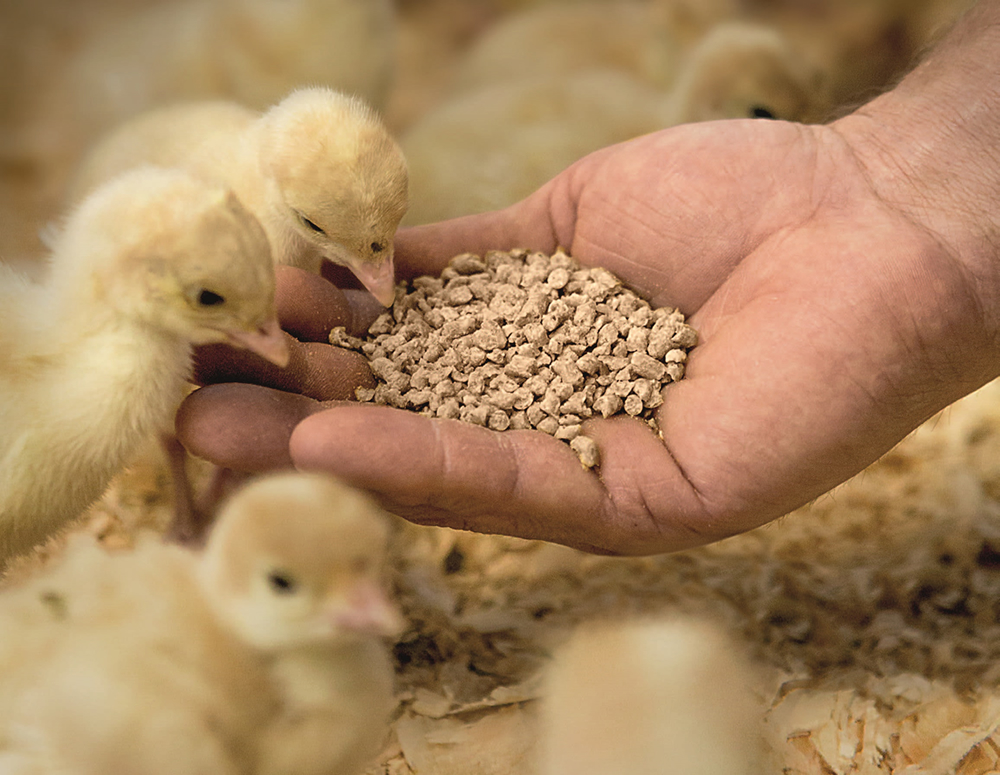
Last year, BASF launched the enzyme product Natupulse®TS that improves nutrient digestion and makes feed for poultry production more cost-effective and sustainable.
As an endo-1,4-ß-D-mannanase, the non-starch polysaccharide (NSP) enzyme hydrolyses ß-mannans into smaller components, for example, manno-oligosaccharides (MOS). The addition of ß-mannanase to the feed decreases digesta viscosity and increases the digestibility of the feed.
eFeedLink finds out more about Natupulse®TS as it speaks to Tanachot Pengsawad, who focuses on technical service (Asia Pacific) at BASF Animal Nutrition, and Dr. Anna Fickler, who is responsible for global technical product management and marketing (feed enzymes).

Tanachot Pengsawad, focusing on technical service (Asia Pacific) at BASF Animal Nutrition

Dr. Anna Fickler, focusing on global technical product management and marketing (feed enzymes) at BASF Animal Nutrition
What are the key factors considered in developing BASF Natupulse®TS?
With our existing enzyme portfolio of Natuphos®E (phytase) and Natugrain®TS (xylanase and glucanase), we were able to counteract the effects of some of these ANFs like phytate, arabinoxylans, and ß-glucans in the feed.
With Natupulse TS (ß-mannanase), we are now able to provide a solution to degrade the ANF ß-mannan, an important non-starch polysaccharide present in soybean meal and other protein sources.
When developing Natupulse®TS, one key consideration was to optimally adapt it to the needs of both our customers and animals. We know from our expertise and experience that the overall stability of a feed enzyme is extremely important for its effectiveness. Therefore, we focused our efforts on a molecule that can withstand high pelleting temperatures and has excellent shelf-life stability even under challenging conditions like high environmental temperature and humidity.
Pengsawad: The global demand for animal protein and thus feed is increasing, which results in rising raw material prices.
We simply cannot afford to waste 30% of nutrient opportunities from both commercial and sustainability aspects. The addition of Natupulse®TS to the diet enables poultry producers to further improve feed efficiency and reduce the amount of undigested nutrients.
For this reason, Natupulse®TS is an indispensable ingredient in compound feeds to assist in optimising feed efficiency by improving nutrient availability amid the challenges of high feed costs.
Natupulse®TS is also optimally adapted to the conditions of the gastrointestinal tract (GIT) of poultry. It is active in a lower pH range and develops optimum efficacy at around pH 4.
In chickens, the pH levels at the beginning of the GIT are low and Natupulse®TS is already very active there. In this way, the negative effects of ß-mannans can be reduced at a very early stage of digestion.
BASF Natupulse®TS shows an additional beneficial effect when used in combination with BASF Natuphos®E and BASF Natugrain®TS. Can you explain the synergy behind this combined application?
Dr. Fickler: In combination, these enzymes lead to a very good release and utilisation of formerly unavailable nutrients present in feeds.
BASF's enzymes target different substrates and are complementary to each other. For example, it is well known that Natugrain®TS reduces digesta viscosity.
Recent trials have shown that the addition of Natupulse®TS can further reduce the digesta viscosity by cleaving the soluble and viscous ß-mannans in the diet, mainly provided by soybean; this paves the way for better endogenous enzyme function.
Because of the partial breakdown of ß-mannans, mannan oligosaccharides are also released. Therefore, by combining Natupulse®TS with Natugrain®TS, there can be a positive impact on the gut microbiota and the production of volatile fatty acids. Thus, the degradation of ß-mannans by Natupulse®TS, the breakdown of phytate by Natuphos®E and the xylans and ß-glucans hydrolysed by Natugrain®TS, all work in sync to maximise the release of unavailable nutrients in the feed. The effects of these interventions can be measured as improved feed efficiency in corn-soy and wheat-soy-based diets.
How can BASF Natupulse®TS contribute to a more sustainable monogastric production?
Dr. Fickler: The addition of Natupulse®TS to BASF's feed enzyme portfolio helps to further increase digestibility, resulting in lower wastage and leading to more sustainable animal production.
We understand that sustainability is also an important topic, not just for poultry producers but also for swine producers.
We have, therefore, started working on the application of Natupulse®TS in swine. This is a good example of producing more animal protein with less feed when combining the right enzyme combinations.
What are the markets where BASF Natupulse®TS is authorised for sales?
Pengsawad: Natupulse®TS is currently available in more than 15 countries globally, including Australia, Bangladesh, India, Malaysia, New Zealand, Pakistan, the Philippines, South Korea and Thailand in the Asia Pacific.
Registration in other countries is ongoing.
- Terry Tan, eFeedLink